
The first frog I spotted (Boana balzani–balzani for short) was thanks to my clunky ambling up and over rocks. At that point in the night, adrenaline was high, inhibitions were low. Some context: it was around 11pm, about 37 degrees, the water at the base of the rock I clung to was at least two feet deep, and I had three more hours of searching for frogs with Bolivian Amphibian Initiative–being wet and cold was incredibly unappealing. Unable to find any seizable holds, I remained frozen, all four limbs clutching desperately to the rock’s face. With a frantic heart beat and frog-like form, I decided to be brave and scuffle upward on the boulder. Bad move. I immediately slid back, my impotent hands tense and grasping, unable to find any nooks. I accepted my fate in what felt like slow motion. When I splashed down, there was a high pressure pause before water streamed fast and cold into my boots. Socks saturated and boots turned high suction marsh, I carried on, somehow merry with frisson and core warmth. Slipping into worst case scenario was freeing.

Pivoting to a different route, I hoisted myself to the top of a boulder and stood up. I was immediately enmeshed in a mass of hanging vines. Jostling around trying to untangle myself, I nearly grabbed a bulbous stem before realizing it had eyes, wise discerning eyes. Face close to this tender creature, I was reminded of the awe that inspired me to dedicate a year to an ever evolving frog project. Her skin glistened yellow green and her sticky feet were beautifully equipped to defy any force of gravity I knew. She sensed my noticing, her breathing quickened. I called to the others, “rana!” The crew hustled over, quickly unpacking cameras, flashes, and light diffusers to get the perfect shot. I learned that frogs are surprisingly poised models, crouching motionless for many rounds of flash filled photo opts.
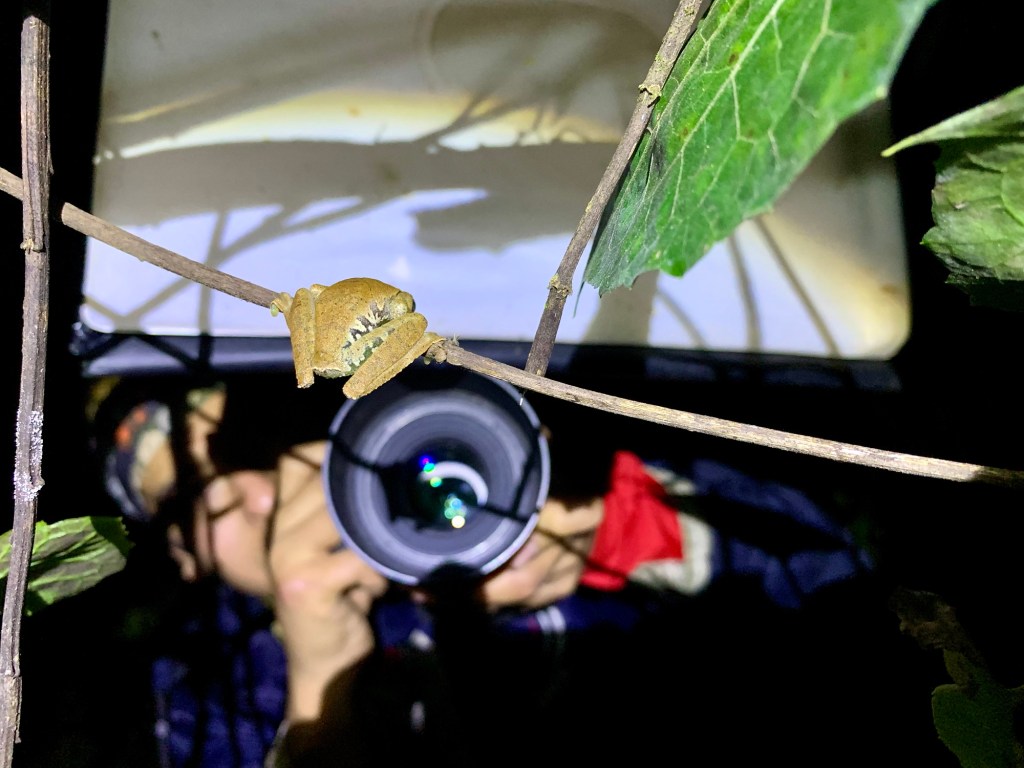
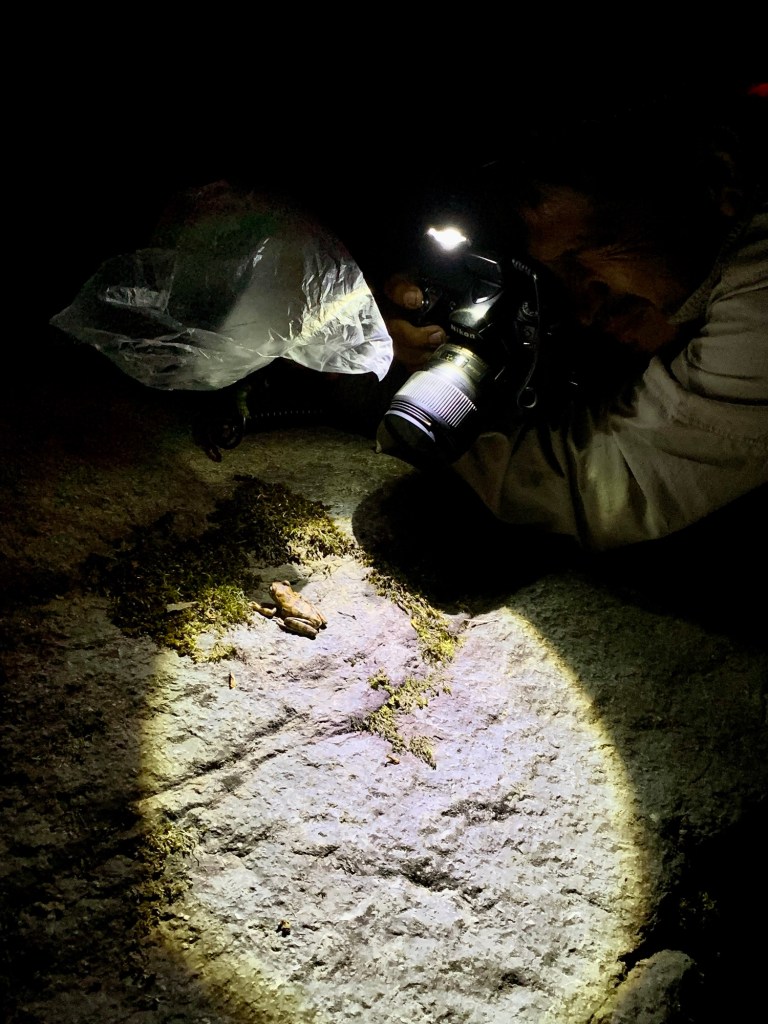
Up close, I felt a consuming love as I became aware of her glassy cosmic eyes, slippery skin, and sensible attention to finding comfortable nooks to rest in. As Robert Macfarlane puts it in The Wild Places, “attention was a form of devotion” and the unencumbered noticing made me want to protect her in every way I could. More than anything though, her frozen fear reminded me of my own. I tried to remember that the documenting was for conservation, a couple spooked moments surely worth the greater good of the species? Still, I liked to imagine the hidden frogs, watching our lights pass over them knowing they would never be found.
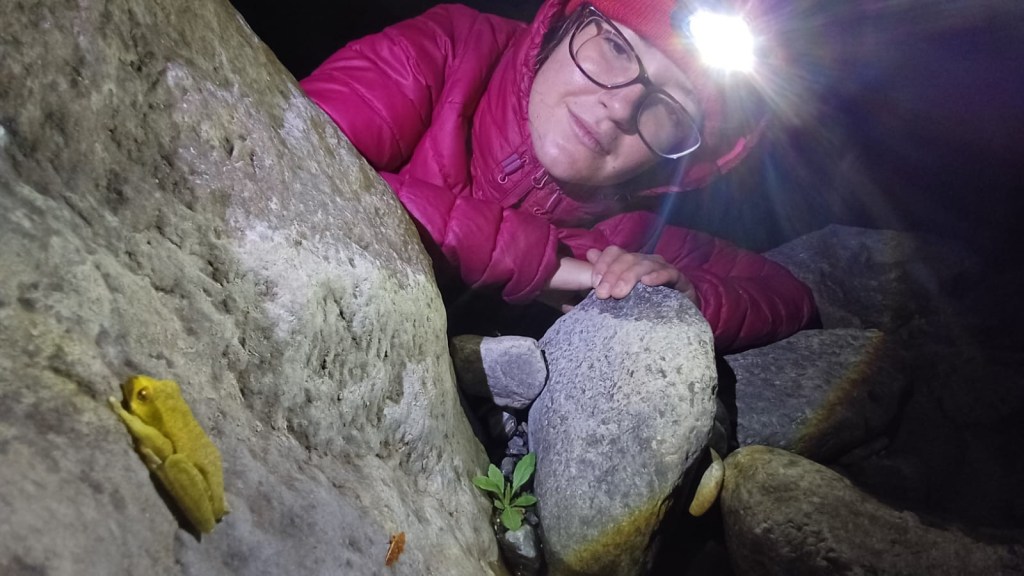
After spotting two frogs, I became less desperate to be a finder and let myself admire the whimsy of our frog quest. The aesthetics were fabulous—seeing through the darkness felt theatrical. Experiencing the jungle in HD high watt fragments was a completely new way to learn about a place. I felt connected to Altamachi because of our concentrated noticing, but outside our sliver of sight, the surrounding jungle remained completely unknown.
Trodding up steep marshy hills, I imagined the opening sequence of a Wes Anderson inspired film. First shot: camera zoomed in on character’s feet as they put on a pair of red rubber boots, camera zooms out to reveal the character arming themself with a flashlight (carried on shoulder), camera then pans to front door where character marches out into the darkness “in pursuit of frogs.”
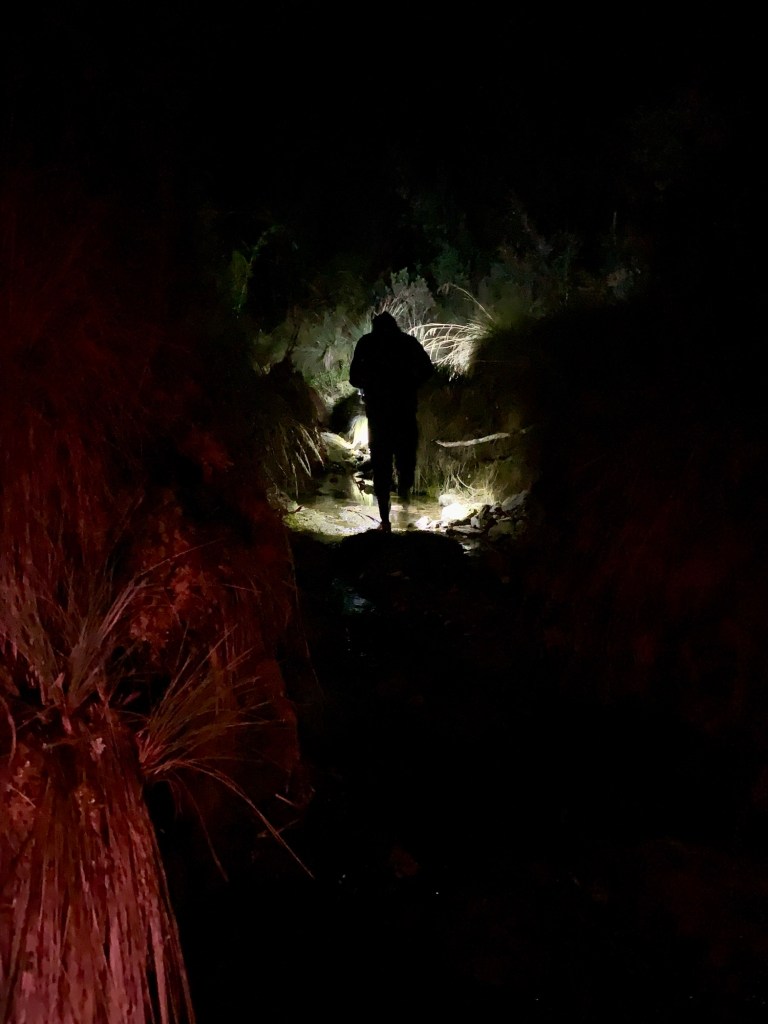
My confidence grew and debilitating caution mellowed when I found myself in my imagined worse case scenario, despite my protective veil of fear. I also became more attuned to the intricacies of endlessly scary rock “pathways” through fast moving water: where rocks were flat, where the algae grew slippery, the sneaky foothold that would let me slink to the top. Climbing waterfalls, navigating barely marked trails, clambering across streams became a euphoric rush of adrenaline and endorphins, timid hesitation forced to an afterthought. The jungle would happily swallowed me up regardless, it was more fun to spring forward and trust I could handle whatever came next.

 Lucy Jackson
Leave a comment