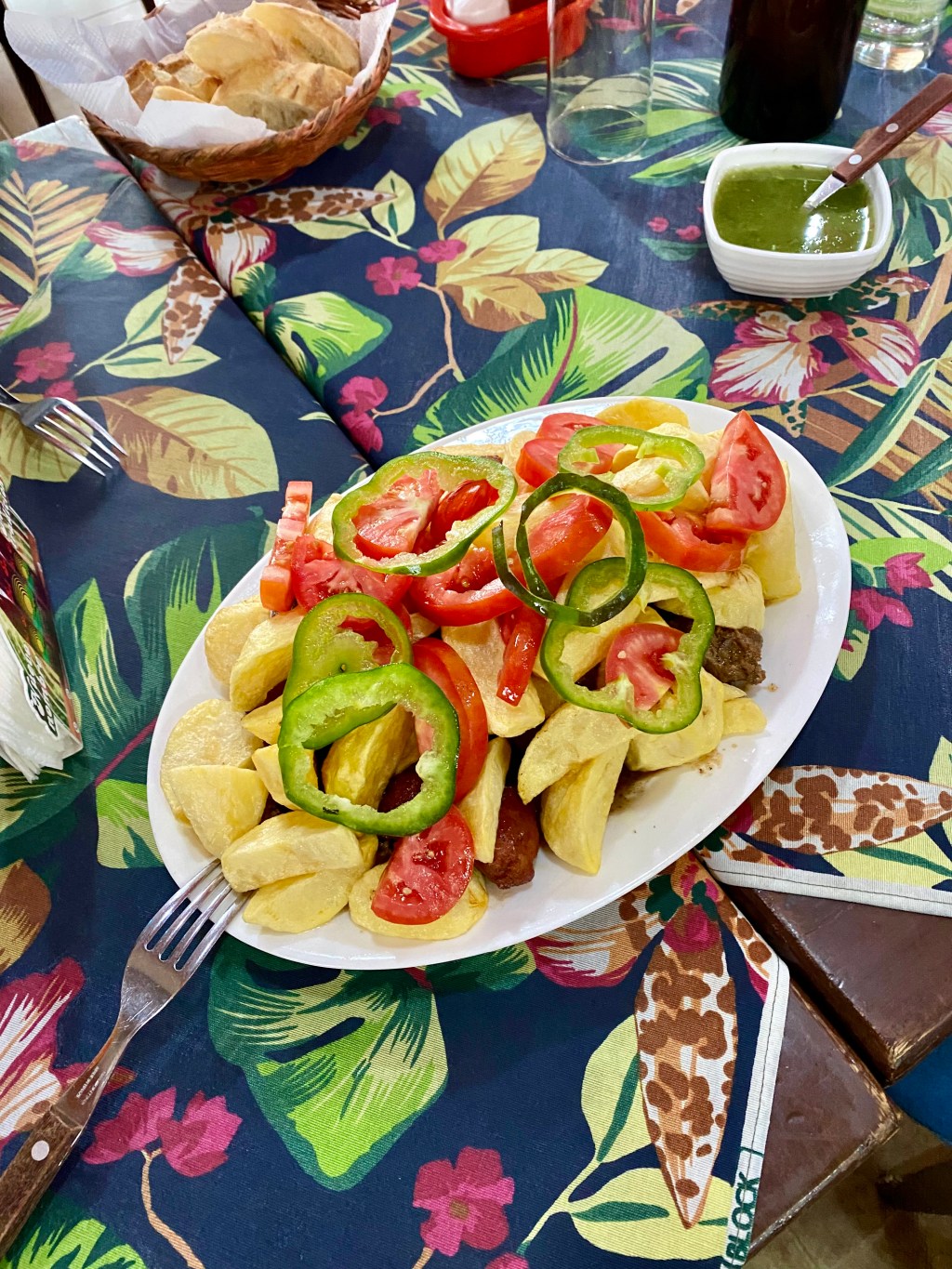
It was a warm night in Cochabamba around 1970 and El Prado, the city’s long central street park, was characteristically a buzz. Sidewalks were full with men gathered around tables drinking beer, playing cacho (a popular drinking game played with dice), smoking cigarettes, and making bets. For Doña Evangelina, chef and owner of El Prado, a restaurant along the lively park with the same name, it was special night. She had friends visiting Cochabamba from Toro Toro, the rural town (el campo) where she grew up. She finally got to share city life and the hub her restaurant had become.
Her friends were a jovial and boisterous bunch, especially after dinner when they hung around chatting while perpetually filling and draining their glasses of beer. As the night wore on, the drunchies hit. Doña Evangelina’s kitchen was usually closed at this hour, but she made an exception for her friends and whipped up a snack with the day’s leftovers and on hand ingredients. She had some beef and sausage from the main lunch dish along with potatoes, a Bolivian kitchen staple. She assembled the rich juicy meat with the fried potatoes on top and fresh tomatoes and peppers for crunchy contrast. When Doña Evangelina delivered the heaping plate of warm, juicy abundance to her friends, out came the (drunken) jealousy in the other customers who watched the plate pass them by. They asked for a serving too, which Doña Evangelina obliged. From that moment on, the dish became a nameless secret menu classic that regulars raved about and ordered nightly.
The name Pique Macho carries conflicting Cochabambino lore. Vivian, one of my Spanish teachers, told me that her mom told her it was a dish first attempted by men, “machos,” who chopped, “picar,” the vegetables in a haphazard way, a story she heard on the streets of Cochabamba as a little girl. However, according to Doña Ana María, the origin is simple: the name evolved from the customer’s original orders, “Queremos ese picado de macho, picado de machos.” In Spanish, “picado” means spicy, a reference to the hot sauce customers doused the dish in. And the macho? Historically, men were the ones who stayed outside the restaurant drinking and ordered the spicy, meaty, robust platter, though a crafty woman was behind “their” dish. Overtime, word of Pique Macho spread throughout Cochabamba and other restaurants began to serve the dish too. For convenience, they shortened the name from “Pique a lo Macho” to “Pique Macho,” a name which has since stuck.
Pique Macho is designed to be shared; each table prepares their own special finishing sauce based on spice preference. Doña Ana María doctored up this sauce for our party of four. She began with “llajwa” a quechua word meaning “salsa de aqi” the spicy salsa Cochabambino’s put on everything and jokingly used to gauge how “Cochabambino” you are, based on the quantity you can consume. Doña Ana told us that some Cochabambinos practically fill up their glasses with llajwa to show their spice dominance. However, Doña Ana took it easy on us and added two good scoops. The spoonfuls sang strong, even Daniel Vasquez, native Cochabambino and Pique enthusiast, confessed “ah, es muy picante,” while going in for more. Doña Ana then added Cochabamba’s classic table condiments: salt, oil, and vinegar, and finished it off with a generous portion of beer, solidifying Pique Macho as the “comida de borrachos.” The sauce is salty, spicy, and tangy and beautifully emulsifies with the rich and smokey meat juices.
Before Evangelina Rojas and Honorato Quiñones opened El Prado in 1968, Doña Ana María remembers her mother working in different high end hotels and clubs like Círculo Militar, an expensive bar and nightclub in the center of Cochabamba. Evangelina’s “buenas manos” (good hands), the Bolivian way of saying someone is naturally skilled in the kitchen, exposed her to effective business management and large scale food production. While learning entrepreneurial skills from the back of the house, she honed her own taste, work ethic, and artistic flair.
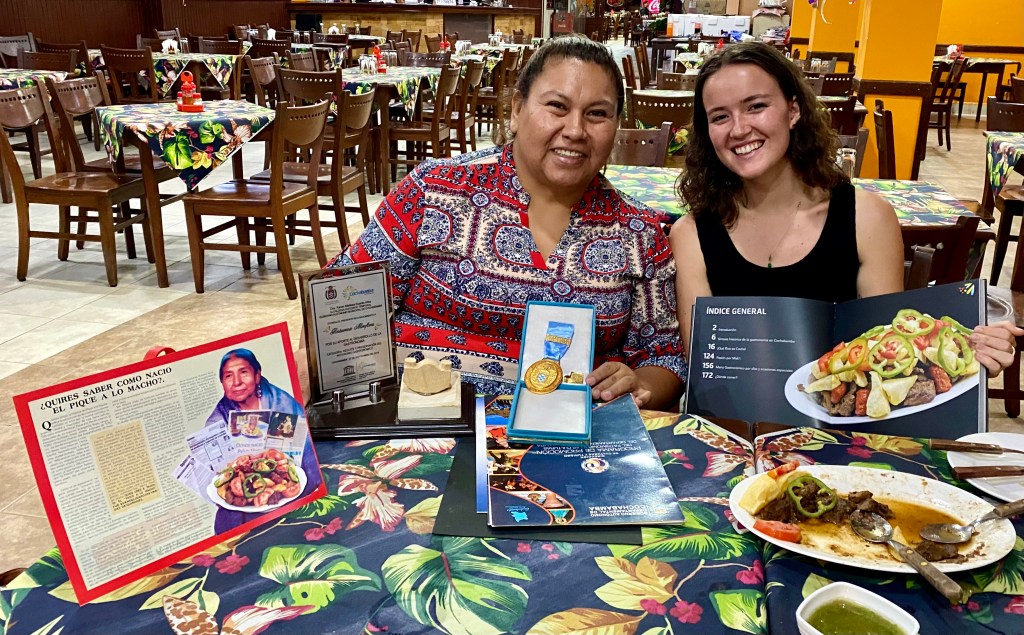
Today, Doña Evangelina’s Pique’s story is central to Miraflores with many renditions incorporated throughout the restaurant: featured on the first page of the menu, on flyers by the cash register, and nearby Miraflores’s entrance a life sized cardboard cutout of Doña Ana María mounted on a pillar offers a heaping plate of Pique Macho and her story with a qr code. Recognition for Doña Evangelina’s story largely emerged in the past ten years thanks to Ana María’s commitment to telling her mother’s story. Ana María left her job as an attorney to take over Miraflores after her mother’s death in 2006. She has since been determined to expand what her parents started.
As we were finishing the last of the salty pique juice dredged potatoes, Doña Ana excused herself. She came back with numerous awards, books about Bolivia’s culinary scene, and medals, each crediting her mother and Miraflores with Pique Macho’s origin. There was a certificate from the “Alcaldía de la Gobernación” that recognizes Pique Macho as one of the most representative foods of Cochabamba and a plaque from 2019 which named Pique Macho “el plato bandera”, Cochabamba’s regional food, thanks to a survey from the Ministerio de Culturas y Turismo coordinated with Cochabamba’s regional government. With the increase in press, the most important thing to Doña Ana is that her mom is remembered as Pique Macho’s creator. She is determined to celement her mother’s legacy as the visionary behind Cochabamba’s culinary classic, a fan favorite shared by Bolivians and tourists a like.

 Lucy Jackson
Leave a reply to denhogan Cancel reply